REHEARSING FOR DEATH

POSTED: Aug 12.09

We do not know where death awaits us:
So let us wait for it everywhere.
To practice death is to practice freedom.
A man who has learned how to die
Has unlearned how to be a slave.
Michel de Montaigne

Gerontologists have learned from their studies of the aged that traumatic events—widowhood, menopause, loss of a job, even death—are not experienced as traumas if they were anticipated and, in effect, rehearsed as part of the life cycle.

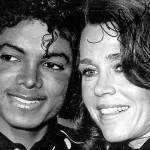
I’ve been rehearsing for my death for decades. This may seem gruesome to some people. My friend, singer Michael Jackson, certainly did. He was too scared to even begin to countenance that he might not live forever.

I even make an effort to imagine myself at 95 years old and about to die. I see myself lying on a bed, frail and wrinkled. I can feel my soft little dog (alas, it won’t be my current dog) curled under my arm. My children and grandchildren surround me. Most of my closest friends are younger than I am and I see them there as well—coming and going as their lives permit. I know that what I want most is to see love in their faces. I know that I will have to live my life between now and then so as to deserve that love. I know that, in order to be able to recognize their love and respond to it, I need to keep my mind alert. I know that in my dying I want to try to communicate my love for them along with a sense of the appropriateness of death. My friend, Zen priest Joan Halifax, wrote that “we have an intuition that a fragment of eternity within us will be liberated at the time of death.” Maybe my friends and family will be able to sense this. Joan also told me about her father two days before he died. A nurse approached him and asked, “How are you feeling, Mr. Halifax?” to which he replied, “Everything.” I’d like to be able to say this right before my death. I feel everything, the pure interconnectedness and interdependence of us all and I know that to do so I will need to learn to have an open, accepting, love-filled heart and that doesn’t just happen. It takes work.

I recognize my tendency to plan everything out according to my vision and I know that I mustn’t cling too possessively to this death narrative but the awareness of it helps me to live every day more fully. The truth is none of us can know what kind of death we will have. It could come instantly or be long and painfully drawn out. I may not be able to communicate at all when the end comes. But I’m glad that I am thinking about all this even though it may not happen for another twenty or thirty years—or more.

In 1981, my father died three minutes before I arrived at Cedar-Sinai Hospital in Los Angeles. When I came into his room I could see he was gone but I desperately wanted to sit with him, touch him, experience closure and try to grasp what was left when the spirit has gone. The nurses would have none of it. They insisted we leave so they could “clean him up.” Western societies do not psychologically equip us to confront death. It’s viewed as an indignity that needs to be “cleaned up.” But if you really think about it, life exists only in relation to death just as light exists only in relation to dark and sound exists only in relation to silence. Very old people know this. None of the centenarians I have interviewed were afraid of dying. On the contrary, their very proximity to it seems to give their lives exquisite meaning.

Not all societies are as death-denying as ours. All indigenous, pre-industrial, pre-capitalist cultures not only venerate the aged, they consciously cultivate a life-affirming death awareness. In Vietnam, the bones of the deceased are buried in the fields so that they will fertilize the rice that feeds their families and, thus, it is believed there is physical and spiritual continuity and the children inherit the strength of their ancestors.

In Mexico you can see death all around you as part of everyday life: Souvenir shops display miniature skeletons dancing and playing instruments and chocolate candies shaped like skeletons. On All Saints Day—what we in the U.S. have commercialized into Halloween trick or treating—families load up on wine, bread, cheese and camp out on their loved one’s graves, singing, reminiscing, and celebrating. All these customs demonstrate that part of life is rehearsing for old age and death, welcoming it with open arms, humor and respect.

Death is a democratic inevitability for every one of us. In my opinion, there’s something worse than death and that is never having fully lived. We can choose to sink into age, denying, resisting, protesting, thus missing the fruits of wholeness. Or we can be liberated to live a full and vibrant life by choosing to grow into age, accepting, letting go, embracing the emptiness with humility.

See you next time

MICHAEL JACKSON

POSTED: Jun 29.09

This is the longest I’ve gone without blogging for some time. But sometimes you just have to let life play itself out without comment. Like so many people, I have been in a wash of images and feelings about Michael Jackson. I knew him as well as one could know him during the time before he did “The Wiz” and up through “Thriller.” I couldn’t pretend to understand him. There were so many complicated signals. Did he want me to be his ‘older women’ friend. He gravitated to older women. For solace? Succor? A beard? Did he want me to teach him the ropes? I never could quite figure it out. But I remember one day he was visiting me at my ranch north of Santa Barbara. It was the first time he had been in that region but he must have liked it because later he bought his ranch in that same area. Anyway, as we walked around the ranch which was perched right at the edge of the mountain overlooking Goleta, I pointed to a spot where I told him I wanted to be buried. Michael had a melt down right then and there when he heard this. He shrieked and bent over and said “no, no, no!” “ What’s the matter,” I asked. “Don’t ever talk about your dying,” he answered. “Don’t ever think about it.”

I think about death all the time. I rehearse my death. I think that’s a healthy thing to do. Death, after all, is what gives life meaning the way noise gives meaning to silence. Ooooh, I thought to myself, Michael will have a hard time of it as he ages. He will spend all his energy trying to flee what is inevitable. And now it’s happened. I like the fact that it was quick. Massive heart attacks that you don’t recover from are quick. You don’t know what hit you. That’s probably the kindest death for Michael. It’s hard to imagine him being happy as he aged. One more demon to try and evade. I like to think he’s happy now, free of his demons. Free and floating and knowing how his art continues to be revered and celebrated by all of us all over the world. It will continue.


Subscribe to receive Jane's blog posts by email. Please note: This is a different email subscription then the one available at the very top right-hand side of this web site which is Jane Fonda's personal mailing list and does not send out automatic updates.

Enter your email address:


  • Monthly Archive

  • SEARCH

  • CATEGORIES

  • MY NON-PROFITS